

Exploring Intangible Religious Heritage: Our Conferences

Cultural Property Protection in Military Operations
The international scientific conference Cultural Property Protection in Military Operations will take place from 3–5 November 2026 at the International Centre for Training and Research on Cultural Heritage in Danger in Wrocław, Poland.
The conference is organised by the International Centre for Training and Research on Cultural Heritage in Danger together with the Department of Education, Culture and Heritage of the Ministry of Defence, the National Heritage Institute, the Polish National Commission for UNESCO, the University of Opole and the Committee of Blue Shield.
The event focuses on the protection of cultural heritage in situations of crisis, armed conflict and military operations, with particular attention to the role of armed forces and international cooperation. Topics include threats to cultural heritage, experiences from conflicts in Ukraine and Kosovo, and cultural property protection within NATO and EU structures.
A dedicated panel within the conference is organised in cooperation with COST Action CA24125 CRICULT and addresses cultural heritage in crisis from a transdisciplinary perspective, including contributions on heritage sustainability, crisis response, and intangible cultural heritage and the law of war.
Intangible Cultural Heritage in Times of Crisis: Transformations, Risks and Governance
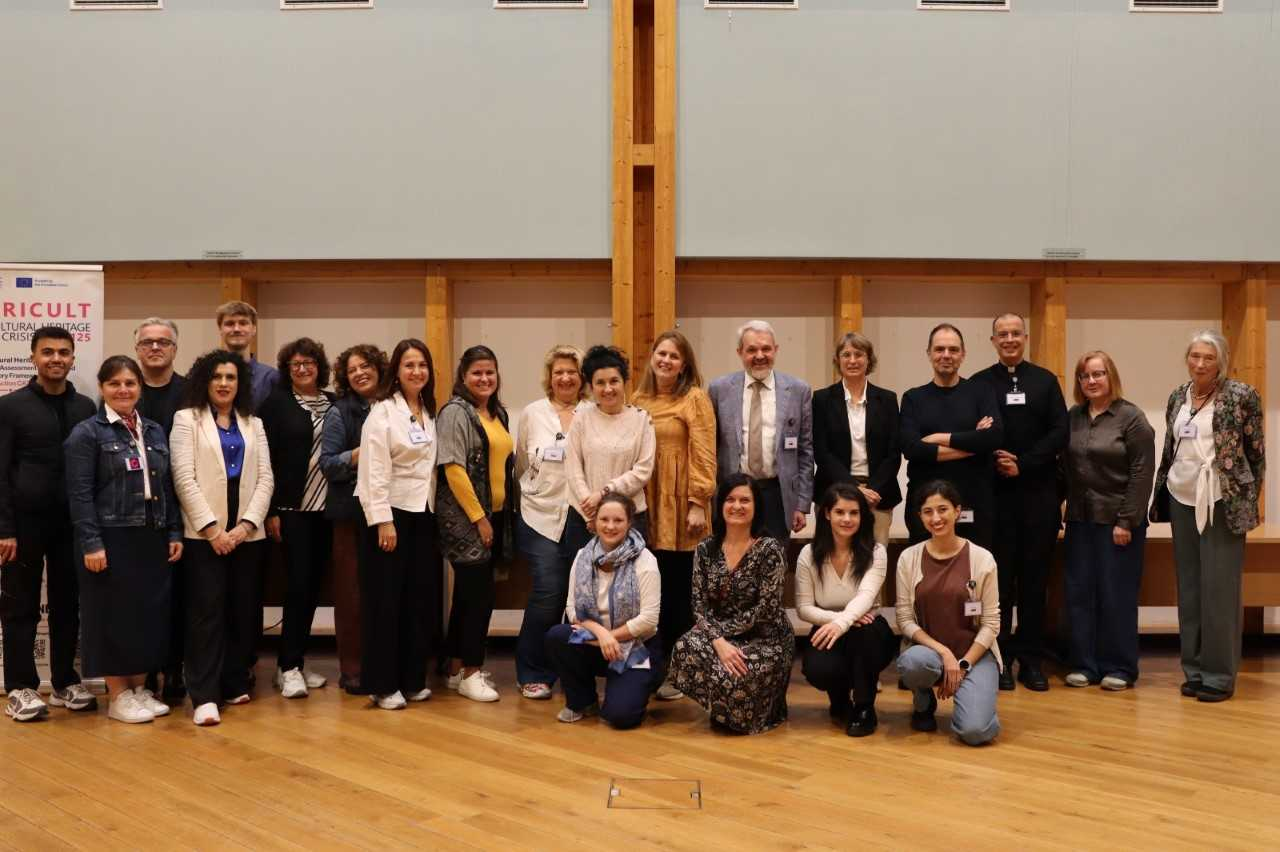
The international conference Intangible Cultural Heritage in Times of Crisis: Transformations, Risks and Governance took place on 17–18 September 2026 at Collegium Polonicum in Słubice, as part of the CRICULT COST Action CA24125 and in cooperation with the European University Viadrina.
Organised by the Chair for Heritage Studies at the European University Viadrina in cooperation with Collegium Polonicum and within the framework of Working Group 4, the conference brought together scholars and researchers to examine how living cultural heritage is affected by periods of crisis and transformation.
The programme addressed three central themes: continuity and transformation, digitalisation and preservation, and law and governance. Contributions explored questions ranging from ritual practices, food traditions and Indigenous heritage to digital documentation, wartime cultural heritage and the protection of intangible heritage through legal frameworks.
The conference examined how communities, institutions, technologies and legal systems can contribute to safeguarding living heritage while allowing it to remain dynamic and responsive to changing circumstances.

Intangible Heritage and UNESCO Nomination Dossiers
On 8 May 2026, the conference Intangible Heritage and UNESCO Nomination Dossiers was held at the European University Viadrina in Frankfurt (Oder), bringing together researchers and students interested in cultural heritage and its international governance.
The event focused on the UNESCO 2003 Convention for the Safeguarding of the Intangible Cultural Heritage and the 2024 Operational Directives, with particular attention to nomination procedures, evaluation criteria and community participation.
Through case studies and practical work with real nomination dossiers, the event examined how intangible heritage is identified, documented and safeguarded within the UNESCO framework. Particular attention was given to representation, community consent, national inventories and the tensions between international recognition and community-based heritage governance.
The event connected theoretical perspectives on living heritage with practical questions of nomination and safeguarding, highlighting the relationship between communities, states and international heritage institutions.

INHERENT Lecture Series – First Edition (March 2026)
The first edition of the INHERENT Lecture Series took place online on 24-25 March 2026, hosted by the European University Viadrina Frankfurt (Oder) and organised within the framework of an Alexander von Humboldt postdoctoral research project.
Entitled
What Remains When Religion Is Gone? Intangible Religious Heritage between Law, Institutions and Lived Practices,
the lecture series is conceived as a space for critical and interdisciplinary dialogue on the transformations affecting religious heritage today. It brings together legal scholars, archaeologists, architects, engineers and heritage practitioners, as well as students, to reflect on the complex relationships between law, governance, material contexts and lived religious practices.
Rather than offering definitive answers, the event focuses on key questions such as:
-
How do legal and institutional frameworks engage with religious practices as intangible heritage?
-
What happens to religious meanings when material contexts are transformed, displaced or reused?
-
Who decides what is preserved, transformed or lost in processes of heritage governance?

Connecting Global Scholarship and Heritage Practice
The programme will feature contributions from internationally recognised scholars and practitioners from Europe, Australia and North America, ensuring a truly transnational and multidisciplinary perspective. Particular attention will be given to issues of cultural diversity, power, post-colonial critique and adaptive reuse of religious buildings, as well as to the role of institutions in shaping heritage narratives.
The lecture series is part of the broader INHERENT research project and is closely connected to ongoing activities within the COST Action CA24125, focusing on the crisis of intangible heritage and its impact on tangible heritage loss.
The recorded session of the First Edition of Lectures of the INHERENT Project is now available at the following link: https://youtube.com/@inherent2026?si=4oDFhOS0X63eR-We